
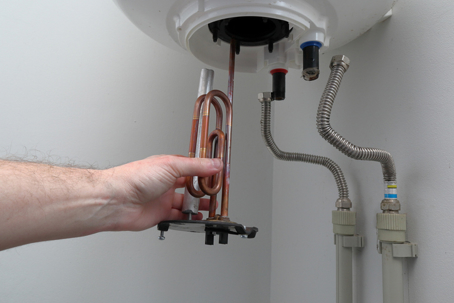
The first time your water heater makes a new sound, it is hard to know whether to go to bed and ignore it or shut everything off and start searching for a leak. We hear that story all the time from Bay Area homeowners who wake up to popping, hissing, or whistling sounds they have never noticed before.
After more than 30 years working on heating and hot water systems across the Bay Area, we can tell you that some noises are completely normal, while others are early warning signs. A few are true safety issues that should not wait. The key is understanding what part of the system is making the noise and why.
In this guide, we will walk through what different sounds usually mean on both traditional tank water heaters and tankless units, how Bay Area water conditions affect those noises, and when it makes sense to call for help versus watch and wait.
Not Every Sound Is a Problem
Every water heater makes some noise in normal operation. The sounds that matter are the new ones, or familiar sounds that are clearly getting louder over time.
On a gas tank water heater, it is normal to hear a soft whoosh when the burner ignites and a low, steady roar while it runs. You may also hear water flowing as the tank refills after hot water use. On an electric tank, a gentle hum is expected when the heating elements cycle on and off.
Tankless water heaters have their own set of “normal” sounds. When hot water is running, you will usually hear:
- A low fan hum is heard as the combustion fan moves air through the unit.
- Clicking at startup as the ignition system lights the burner.
- A brief gurgle right after you turn off a tap as water drains through the heat exchanger.
Those sounds should stop once you stop using hot water. If they change character, get much louder, or keep going when no hot water is running, that is when it is time to pay closer attention.
Popping, Rumbling, or Knocking Inside the Tank
Popping or rumbling from a tank-style water heater is one of the most common noise complaints we see. In most cases, the root cause is sediment buildup and mineral scale at the bottom of the tank.
Bay Area water hardness plays a big role here. In Santa Clara County, groundwater hardness averages over 250 mg/L, which Santa Clara Valley Water classifies as very hard. San Jose Water reports supplies in the 11-26 grains per gallon range, which means a steady stream of calcium and magnesium deposits entering your water heater each day. That mineral content settles out in the tank, forming a crusty layer on the bottom.
When the burner or lower heating element turns on under that layer, small pockets of water trapped in the sediment superheat and burst through it. That is what produces the popping, rumbling, or knocking you hear. It is similar to boiling water under a lid pressed down by a weight.
In contrast, San Francisco's Hetch Hetchy water has about 9 ppm dissolved minerals, which is extremely soft. In those homes, sediment buildup happens far more slowly, so you may never hear a loud rumbling, even on an older tank.
What this means for maintenance:
- Rumbling that slowly gets louder over weeks or months usually points to progressive sediment buildup.
- An annual tank flush is the standard preventive step to reduce sediment. In very hard water areas, some homes benefit from flushing twice a year.
- Sharp, metallic knocking can also be water hammer, which is a pressure shock in the pipes when valves close quickly, rather than a tank problem itself.
Ignoring severe sediment buildup can shorten the tank's life because the burner or element has to work harder to heat the water through that insulating layer. It can also make your water heater less efficient.
Hissing, Sizzling, and What They Mean on Gas vs. Electric Units
Hissing and sizzling noises can be harmless or a sign of something more serious. The type of water heater you have matters.
Gas Water Heaters
On a gas unit, you might hear a brief sizzling sound when the burner is running on a cold day. Often, that is just a little condensation from the flue or the tank dripping onto the hot burner surface. As long as it is occasional and there is no gas smell, that is usually not a concern.
However, persistent hissing near the gas valve or burner area, especially if you smell gas, is a safety issue. That can indicate a gas leak or incomplete combustion. In that situation, you should:
- Turn the gas control to “off” on the water heater if you can do so safely.
- Avoid using open flames or creating sparks in the vicinity.
- Leave the area and contact a qualified technician or your gas utility.
Electric Water Heaters
On an electric tank, a steady hiss that continues while the element is on often means the lower heating element is buried in sediment. Water touching that super-hot, partially exposed element can flash to steam on contact, which creates the hissing sound.
Fixing that typically requires draining the tank, removing the element, and inspecting both the element and the tank interior for scale and corrosion. Continued operation in that condition can stress the element and may eventually lead to leaks.
When Hissing Comes With Water on the Floor
Any time you hear unusual noises and see water pooling at the base of the water heater, treat it as an urgent situation. A small leak can quickly turn into a larger one, and a leaking tank cannot be repaired.
In those cases, it is better to schedule same-day service if you can, both to protect your home from water damage and to catch any failure early while options are still open.
Whistling, Screeching, and the T&P Valve
High-pitched noises, such as whistling or screeching, almost always indicate restricted flow or pressure issues somewhere in the system.
Sometimes, the cause is simple. A partially closed cold-water inlet or hot-water outlet valve can force water through a narrow opening, much like air through a whistle. Making sure those valves are fully open can resolve the sound in a few seconds.
Other times, the sound is coming from the temperature and pressure relief valve, often called the T&P valve. This safety device is usually mounted on the side or top of the tank, with a discharge pipe running down the side. It is designed to open if the tank pressure exceeds 150 psi or the water temperature rises above about 210 degrees Fahrenheit.
If the T&P valve begins to whistle, hiss, or discharge water, it may be doing exactly what it is supposed to do: relieving excess pressure. What matters then is why the pressure is getting too high.
In many Bay Area homes, the plumbing system is considered a closed system because of a check valve or backflow preventer on the municipal water connection. Under the California plumbing code, those systems are supposed to have an expansion tank, which is a small tank installed on the cold water line that gives heated water a place to expand safely.
When there is no expansion tank, or it has failed, the water heater's normal thermal expansion has nowhere to go. Pressure can rise until the T&P valve opens, often with a sharp whistle or screech and sometimes with visible dripping or spurting from the discharge pipe.
Important safety notes about the T&P valve:
- Never cap or plug the discharge pipe to “stop the leak.” That removes a critical safety path for pressure relief.
- Do not try to force the T&P valve closed if it is actively discharging. The underlying pressure or temperature issue needs to be addressed.
- If the valve is opening repeatedly, that is a sign the system needs attention, often starting with the expansion tank.
Noises Specific to Tankless Water Heaters
Tankless water heaters pack a lot of heating capacity into a compact box. Because they use much narrower internal passages than tank models, they are more sensitive to mineral scale and flow issues, especially in hard-water areas of the Bay Area.
One common complaint is a low rumble or vibration when hot water is running. This can happen when sediment buildup and mineral scale coat the tankless heat exchanger. Water has to squeeze through narrow passages, creating turbulence and noise. Regular descaling flushes are critical to keep those passages clear.
Another source of strange sounds is the flow sensor inside the unit. This component detects water movement and helps control the amount of gas the burner uses. If it gets dirty or fouled with debris, the sensor can misread the flow, causing the burner to cycle erratically and produce unfamiliar noises or surging.
Ventilation also matters. Tankless units use an exhaust fan to move combustion gases outside. If the vent pipe is blocked, undersized, or installed with poor slopes, the fan can make:
- Banging as pressure pulses in the vent.
- Whistling as air squeezes past restrictions.
- Whooshing if the fan is working harder than it should against resistance.
Two tankless warning signs that should not be ignored are:
- Rapid clicking that does not lead to ignition, or repeated attempts to start that end with an error code.
- Loud banging or fan noise when no hot water is running, which can indicate a venting problem or a vacuum siphoning effect.
Tankless systems have built-in safety controls and manufacturer warranties, and opening the cabinet yourself can sometimes void that coverage. If your tankless unit is making new or aggressive sounds, especially paired with error codes or shutdowns, it is safer to have a trained technician investigate.
Other Components That Can Contribute to Noise
While the tank or heat exchanger often gets the blame, several specific parts inside and around your water heater can contribute to noise over time.
The dip tube, which carries cold water from the top of a tank down near the bottom, can crack or break. When that happens, incoming water can churn more near the top of the tank, sometimes causing unusual gurgling or knocking sounds along with uneven water temperatures.
The anode rod, a sacrificial metal rod inside the tank, attracts corrosion, prolonging the tank shell's lifespan. As it wears away, small pieces can detach and move in the tank, adding to rattling or knocking noises when water flows.
Outside the heater itself, piping issues can be noisy too. Water hammer, a sudden banging in the pipes when valves close quickly, occurs when moving water has to stop abruptly. That shock wave can echo through the plumbing and can sometimes be mistaken for a problem inside the water heater, even though the tank is just where you hear it most clearly.
When to Call for Service vs. When to Wait
Because water heater noises cover such a wide range, it helps to group them by urgency. Here is a practical way to think about your next step if your water heater is making noise.
Noises That Are Usually Harmless
These sounds often point to normal operation or minor issues that can wait for a convenient appointment, as long as they are not changing quickly:
- Soft ticking or clicking from pipes as they warm and cool. That is typically thermal expansion, where metal pipes move slightly in their supports.
- A low electric hum from elements cycling on in an electric tank.
- Brief sizzling on a gas unit during heavy use in cold weather, with no gas smell and no water on the floor.
Noises That Deserve a 24 to 48 Hour Service Call
These sounds do not usually mean immediate danger, but they do suggest a problem that can worsen if ignored:
- New popping or rumbling from a tank, or existing rumbling that is clearly getting louder over time. This points to sediment buildup and mineral scale that should be addressed.
- Screeching from a valve that you have confirmed is fully open. That can indicate a restriction or pressure issue worth checking.
- Persistent hissing on an electric water heater, especially from the lower area where the element sits.
- Ongoing rumble or vibration in a tankless unit that does not go away after a descaling flush, or that started suddenly.
Noises That Call for Immediate Action
Certain combinations of sounds and symptoms should be treated as urgent. In these situations, it is usually best to shut the unit down and arrange prompt service:
- Any hissing accompanied by the smell of gas.
- A T&P valve actively discharging water or steam, especially in bursts or a steady stream.
- Banging loud enough to shake pipes or the tank, particularly if it is new.
- Any unusual noise plus visible water on the floor near the tank or tankless unit.
- Repeated ignition clicks on a tankless water heater with no successful startup, or loud fan noises with error codes.
In all of these cases, earlier diagnosis almost always costs less than waiting for a full failure. Catching sediment buildup, pressure problems, or failing components early can mean a straightforward repair or maintenance visit instead of emergency replacement and water damage cleanup.
How We Approach a Noisy Water Heater in the Bay Area
When we respond to a water heater making noise, we start with the basics: what type of unit you have, where you live, and what your water supply looks like. A tank in a San Jose home on very hard groundwater faces different risks than a tankless heater in a San Francisco home on soft Hetch Hetchy water.
Our licensed, insured technicians look at the whole picture, not just the noise. That can include checking for sediment buildup and mineral scale, inspecting the anode rod and dip tube, confirming the condition of the T&P valve and expansion tank, and, on tankless units, evaluating the heat exchanger, flow sensor, and venting.
From there, we talk through whether you are looking at a simple maintenance flush, a targeted repair, or a situation where replacement is worth considering, given the system's age and condition. We are always upfront about costs so you can make a decision that fits your home and budget.
Next Steps If Your Water Heater Is Making Noise
If your water heater is making a sound that has you second-guessing its safety, you do not need to ignore it or assume the worst. Often, a bit of maintenance on a tank or a descaling flush on a tankless unit is all it takes to quiet things down and improve efficiency.
When you are unsure, it helps to have someone familiar with Bay Area water conditions and building codes listen, look, and explain what is really going on. The team at Comfort Energy, Inc. has been working with local homeowners for decades, and we are available around the clock to determine whether that new noise calls for a quick tune-up or a bigger conversation about replacement. You can reach us anytime at (408) 560-4050.